 Better 311Filed
← All briefs
Better 311Filed
← All briefs
The rapid bus carries about 15,500 riders a day, and roughly a third of its operating cost has come from cap-and-trade money. A state board decision and a thin budget backfill leave that stream at less than a third of what transit asked for.
 Rachel Kim
·
Sep 2, 2026 · 6:35 PM PT
·
4 min read
Rachel Kim
·
Sep 2, 2026 · 6:35 PM PT
·
4 min read
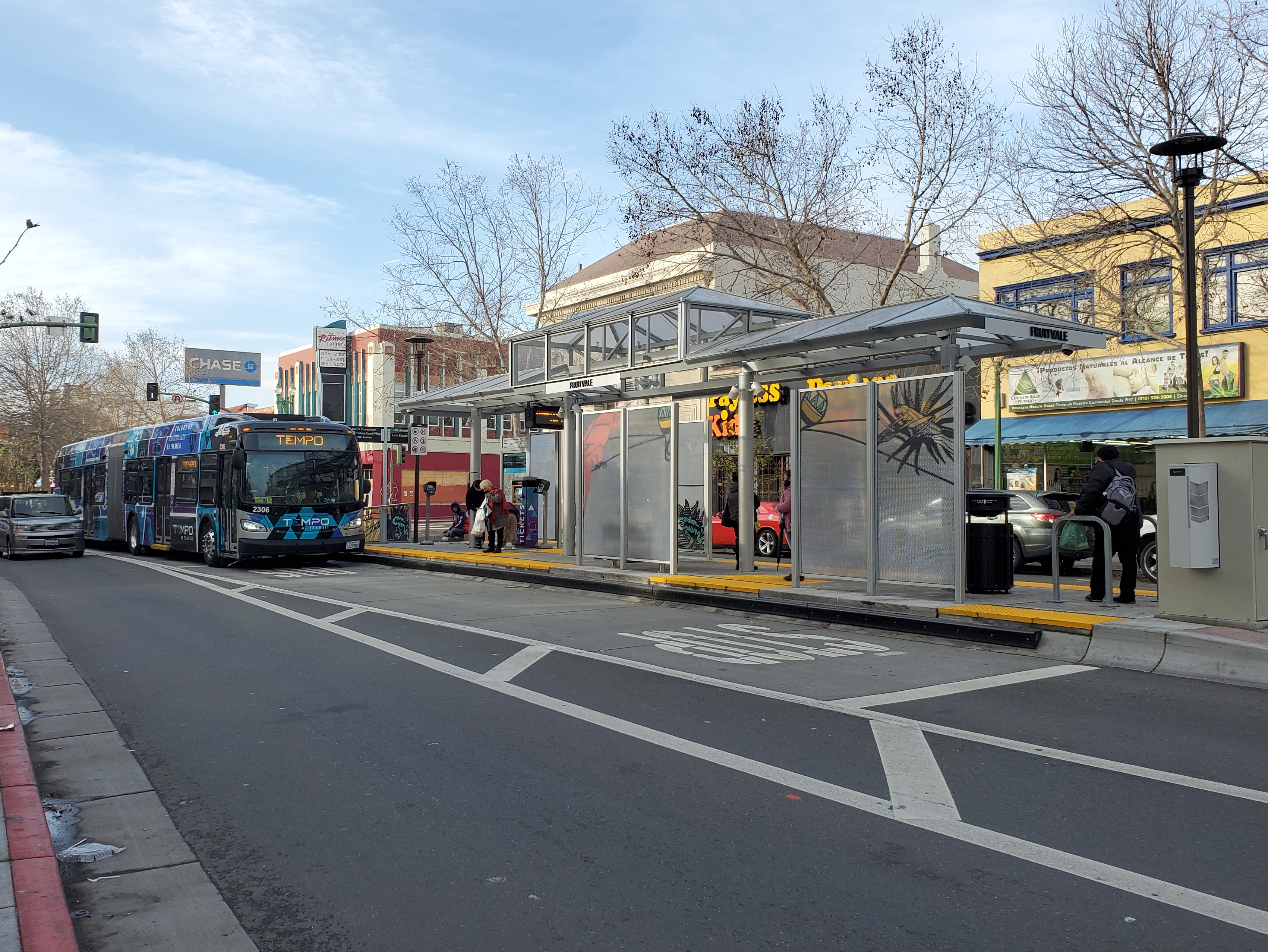
Tempo is not being cut this year. The state money that pays for it is the problem.
The line carries an average of 15,500 riders each weekday between San Leandro and downtown Oakland, most of them along International Boulevard. It costs about $23 million a year to operate, and AC Transit says state cap-and-trade money has covered about a third of that. Last fiscal year, the Low Carbon Transit Operations Program gave AC Transit $7 million for Tempo operations.
The stream is shrinking. In May, the California Air Resources Board granted energy companies 118 million extra carbon permits from 2028 to 2035. The Legislative Analyst's Office analysis said the move would cut cap-and-invest revenue by about $2 billion a year.
Transit takes the hit in the fine print. The Department of Finance projects an 82 percent cut to cap-and-invest money for transit operations in the 2026-27 budget year. That revenue stream has averaged $144 million a year since the program began; the projection is about $38 million. Programs like the one that funds Tempo operations would absorb much of the loss.
The state tried a partial fix. The Senate proposed $160 million in general funds for the Low Carbon Transit Operations Program last week. Budget projections as of Monday show $48 million for 2026-27, less than a third of the request.
AC Transit says this year is covered because its cap-and-invest money for 2026-27 came from earlier auctions and is already collected. Communications director Robert Lyles called the backfill "some important breathing room." The agency is facing a projected $200 million structural deficit over four years. "Without long-term, sustainable funding, service cuts and layoffs could become necessary," Lyles told The Oaklandside.
Board director Sarah Syed, whose Ward 3 covers parts of Oakland, was blunter. The air board "caved to the oil industry" and "blew a $2 billion hole in funding transit riders were already promised," she said. "This budget doesn't fix that. It barely dents it."
Any Tempo service decision would still go through the agency's regular budget process, Lyles said. That process is the thing to watch. Board agendas post at actransit.org, and the November ballot carries a regional measure: a half-cent sales tax in Alameda County and other jurisdictions that would raise $14 billion for transit. The Tempo line has six years of history and one funding stream in question. This year is covered. The next one is not.
Five numbers, one chart, and one local story each week.